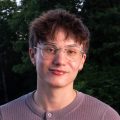
The Overlook is conducting a series of interviews with candidates running in the Nov. 3 election, offering readers an opportunity to hear directly from those seeking to shape their communities. In this installment, reporter Connor Greco interviewed Michele Frazier, Democratic nominee for New York’s 51st Senate District. The district includes parts of Ulster, Broome, and Chenango counties, as well as all of Delaware, Schoharie, Sullivan, and Otsego counties.
In The Overlook’s coverage area, the district includes the town of Olive.
Frazier, 47, lives in Delhi, in Delaware County, where she works in real estate for a woman-owned brokerage serving five counties. Before going into real estate full-time, she taught criminal justice at SUNY Delhi. She previously served on the Oneonta City Council and ran an unsuccessful campaign for state Senate in 2024, losing to incumbent Republican state Sen. Peter Oberacker, who is leaving his seat to run for Congress. Frazier is married and has three children, two of whom are neurodivergent.
On the ballot, she will appear on the Democratic and Working Families party lines.
Frazier is running against Assemblymember Christopher Tague, of Schoharie, who represents the 102nd Assembly District. He will appear on the Republican and Conservative party lines. A spokesperson for Tague didn’t respond to The Overlook’s latest request for an interview.
The following has been lightly edited for clarity and concision.
The 51st Senate District includes some of the most rural parts of New York. What do you think Albany policymakers most often misunderstand about rural communities, and what would you do differently?
Frazier: They misunderstand both our population and our geography. I did a “Backroads Book Club” this year, where I challenged people to read the book “The Rural Voter.” It talks about what is different about rural people, and there’s two things. One is that rural communities and people actually think in terms of community, not in terms of individuality. We show up to the local parades. We show up to the middle school basketball games. There’s an urban perspective of, “Well, that’s because you don’t have anything to do up there.” No, it’s actually because we are committed to raising our children as a community.
There’s also a misconception that rural people are backwoods, that rural people are not sophisticated, and that rural people don’t know their own interests. That’s a false perception. We have some amazingly brilliant people who understand the land in ways that urban people don’t get. So, we understand things differently, but it’s also because our experience is different.
What I would do differently? I think it’s having conversations and having urban lawmakers come visit. I know there is a rural tour that has been focused on farming, which I love, but our rural communities are not just farming communities. We need to really emphasize that kind of exchange between rural and urban communities in the state of New York.
The second thing is, we have a supermajority in the chambers up in Albany. Being a Democrat from a rural community gives me a louder voice within that platform. If I win this district, there will be three Democratic women representing rural communities from the Southern Tier all the way to the Hudson Valley. That really provides access to the structures of power to make changes for our rural communities.
Editor’s note: Democrats hold a supermajority in the Assembly, but not the Senate.
What is your position on New York’s current spending and budget priorities? Are there areas where you believe the state should spend more, and areas where you think the state should spend less?
Frazier: My main platform is housing, healthcare, and a fair share. Healthcare, we are seeing deserts. People are traveling hours to get healthcare in rural communities, doctors aren’t staying, nurses are moving around. We have to invest in healthcare in a way that actually makes sense, and universal healthcare would decrease the cost of healthcare.
We need to really get to a point where we have a universal healthcare system in the state of New York that will bring our costs down, increase our access by bringing doctors and hospitals back into our local rural communities.
This is also an economic development issue. If I have to take my kid, which I do, from Delhi to Cooperstown for a doctor’s appointment, it’s an hour to get there and an hour to come back. That’s three hours of my day to get my child healthcare. Now, I’m not working three hours. If I’m an hourly wage worker, I’ve actually decreased my income because I can’t access medical systems. That’s a number-one priority, both from cutting costs, but also from a spending perspective.
Housing affordability has become an increasingly important issue in the Catskills and other parts of the district. What role should the state play in making housing more affordable while preserving the character of rural communities?
Frazier: There were programs that, when I first started selling real estate 13 years ago, to rehab homes. There were grants to people who struggled with the down payment, as well as for the house. You could get, for example, $20,000 towards your down payment, and $20,000 for structural fixes to the house. What that meant was houses were brought up to habitability, and people who were maybe struggling to afford a home could afford that home. We need to bring these programs back to our rural communities.
When I sat on city council in Oneonta, we constantly had to have surveys done. If you want a grant from the state, you have to get a survey. If you want to make changes to something, you have to get a survey.
One of the major, major issues is zoning laws in our small communities. We’re talking about short-term rentals, about numbers of people that can be on an acreage, accessory dwelling units, all of those things need data. Those surveys were like $100,000 per community. If you’re a small town like Olive, are you spending $100,000 for every zoning study you need? No. That’s a complicated thing to do.
I want to make a zoning czar at the state level that actually takes the data and tells us, what are some of these policies that are working, how do they work, and what are the confounding factors, so our local communities can make their own zoning choices and do it with the best information that we can provide them.
What is your position on the state’s current approach to renewable energy development, and how would you balance the state’s climate goals with concerns about land use and local control?
Frazier: This is a fair share piece also. Rural communities have sort of been co-opted for the use of mega corporations or for urban development. I am very pro-us getting towards a place of renewable energy. We don’t have a choice. That is something we need to head towards.
We also need to do it in a fashion that isn’t on the backs of rural communities. What that means is rural communities having control, having conversations, being able to be a part of that strategy. I think this is a community partnership and an all-hands-on-deck process, not a complete mandate from the state.
I think we can get there, because I’m talking to people all the time and no one I talk to says, “We don’t want the Earth to be around.” We all have the same goal. So when we are making these decisions, they have to have community input.
We also need to balance the use of our farmland. We are now moving in a climate world. I sell real estate. People are coming here for climate migration. It is happening. We have water and very fertile ground. We have farmers who know it in their bones how to grow food. That knowledge is really critical because I think we are going to end up being the breadbasket of the United States again.
California’s on fire. The Midwest and the South are drying up and heating up, we actually have the ability to grow. So we want to make sure that we’re looking in the long term of balancing energy and food. Farmers are a huge partner for us in this process.
Olive is the only town in The Overlook’s coverage area within the 51st Senate District. It is also part of the New York City watershed and home to much of the Ashokan Reservoir. How should New York balance protecting the city’s drinking water supply with the needs and property rights of watershed residents and municipalities?
Frazier: This is about being good neighbors. The Ashokan Reservoir delivers 40% of New York City’s water, and it’s important to provide clean water. They pay their taxes into our system, but being a good neighbor isn’t just about paying our taxes. It’s also about helping with information. It’s about showing up to the meetings with listening ears as to what’s happening in our communities.
I know, for instance, septic systems are a huge concern because development in these regions needs septic systems in order to increase our housing stock. But every time we develop a septic system, it has a greater cost to a local homeowner in order to put it in, to have it engineered and designed to make sure it meets codes for New York City’s drinking water.
We need help with those things. We need subsidies for getting those higher-level engineered septic systems put in so that we can develop.
The reality is, New York City, because of their concerns with this water, they’re our neighbor. Us rural folk know how to show up and bring the soup. We need New York City to also show up and bring the soup.
Connor Greco is a staff reporter for The Overlook covering Windham, Hunter, and surrounding Greene County communities. Send correspondence to connor@theoverlooknews.com.