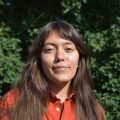
Lenape tribal members from Wisconsin, Oklahoma, and Ontario came to Ulster County this fall to see their ancestral homelands, the latest step in a county effort to rebuild ties with descendants of the Esopus people.
The visits come amid early discussions about giving land back. Lenape members have spoken with a private landowner about a possible donation, said Ulster County Historian Eddie Moran. He declined to identify the landowner because the talks are in their earliest stages.
The county effort began in April, when Moran and a group of local scholars traveled to Ontario to meet with members of the Munsee-Delaware Nation and the Delaware Nation at Moraviantown, The Overlook reported in May. The Esopus were a Munsee-speaking Lenape people whose homeland included much of what’s now Ulster County.
Two groups made the trip as Moran’s guests: 11 people in September and four in October. They studied the county’s archival records, toured Uptown Kingston, and visited the Hudson River Maritime Museum and the Senate House State Historic Site. The September group also joined “Return of the Buffalo: Tatanka Owe Akupi,” a procession of life-size buffalo puppets through Lower Manhattan and Downtown Brooklyn created in partnership with Lenape and Lakota elders.
At sites across the county, Andy Jacobs played the Delaware Stick Dance song, music she said her ancestors probably hadn’t heard on this land in hundreds of years. Jacobs, a member of the Delaware Nation at Moraviantown who lives in Arizona, has served as the main bridge between Moran’s team and Lenape communities.
Jacobs said she became emotional when she came across the footings of a wigwam, a domed shelter.
“I feel that when we are emotional, then that’s where our ancestors were in that specific spot,” Jacobs said.
Many Lenape know little about their ancestral lands, Jacobs said; much of their language, culture, and customs were lost when their ancestors were forced out. Those who make the trip bring what they learn home to those who can’t, and each nation holds different pieces of a shared culture, she said. Moran said each visit fills in Ulster’s history, too.

“We’re going back and learning our history, learning our cultures, learning our language, learning to be together,” Jacobs said.
Janiyakuha “Hunny” Webster came to Ulster for the first time in September from her reservation in Wisconsin. She’s the newest member of Lenni Lenapexkweyok, the Lenape women’s group Jacobs works with, which brings together women from five Lenape nations. No matter where you live, the land speaks to you, Webster said.
“We got to tell people that our people are out here still, trying to keep our culture alive and doing what we can to break our own cycles with our historical trauma and our generational trauma,” Webster said.
Many people who come to talks on the Lenape think they no longer exist, said Harv Hilowitz, a contributing scholar at the maritime museum who spoke on the Esopus-Lenape at the Olive Free Library on Nov. 21.
“In fact, the Lenape are undergoing a Renaissance right now,” Hilowitz said.
The Esopus lost most of their land in Ulster within about 50 years of Dutch settlement. Colonists fought two wars with them between 1659 and 1664 around what’s now Kingston, then called Wiltwyck, and the Esopus later sold large tracts to Huguenot settlers in New Paltz and elsewhere. In 1708, the colonial government granted the Hardenbergh Patent, about 2 million acres covering much of the Catskills, after a Kingston merchant bought land from an Esopus leader for 60 pounds.
A 1665 peace treaty with English Gov. Richard Nicolls was renewed 13 times, with the latest known renewal in 1745, even as the Esopus were pushed farther from their homeland. The relationship broke during the American Revolution, when the Esopus and the revolutionaries ended up on opposite sides. In 1777, George Clinton, who became New York’s first governor that year, refused to renew the treaty. Many Esopus descendants now live in Ontario. Moran said he hopes the county will eventually renew or reaffirm the treaty.
“They’re the ones who lived here for thousands of years and yet they’re the ones traveling on an hour-long flight to get here, and I’m the one who still gets to sit in my office in Kingston, getting paid by the government that kicked them out,” Moran said.
What Would Have to Happen
Turning the visits into a formal partnership would take agreement on several fronts.
Moran said he and County Executive Jen Metzger agreed the county would benefit from a policy to guide the work. None has been drafted, and he hopes to eventually bring a formal agreement before the Ulster County Legislature.
A land donation would also raise questions about access and management. The Lenape nations and their members have their own views on who should have access to a site and how it should be managed, Moran said.
Even the visits depend on money. The tribes pay for the trips through grants and year-round fundraising, and out of pocket when grants fall short. Visitors camped at historian Justin Wexler’s home through Wild Hudson Valley and stayed at the Hudson Valley Farm Hub and the Norrie Point Environmental Center.
A dedicated place to stay would cut housing and meal costs and make visits more accessible, Moran said. He said having land would also give Lenape communities a place to revive traditional spiritual practices.
The most direct descendants of the Catskills Esopus belong to a group absorbed into the Six Nations of the Grand River, a Haudenosaunee community in Ontario, and may have reason to be wary of Ulster, Moran said.
“If somebody punched me on the arms 99 times and then before the hundredth time, they turn to me and they say they want to be my friend, they’re never going to punch me again, I’m not going to believe them,” he said.
For Moran, the work is an obligation.
“Our responsibility to support the Lenape is almost a kind of historical debt that we’ve inherited,” he said.
What Comes Next
- Seeds: Jacobs gave seven kernels of Delaware Blue Corn to the Poughkeepsie Farm Project, which now has more than 500. The goal is a seed bank so Lenape communities can grow their own. She has also taught two classes on Lenape plants at Marist University’s community garden.
- Conservation: Moran said the state Department of Environmental Conservation’s estuary program invited him to speak about Esopus history and building relationships with tribes.
- Events: The women’s group plans two events in 2027: one with Wild Earth in late May and a living history event at Historic Huguenot Street in New Paltz on June 13.
- Film: Moran plans a panel next year with Lenape cast members of “Stomping Freedom,” a film about the American Revolution.
- Book: Wexler is writing a history of the Native people of Ulster and Greene counties, with guidance from the tribes, expected within two years.
Mia Quick is an editorial assistant and reporter at The Overlook. Send correspondence to mia@theoverlooknews.com.