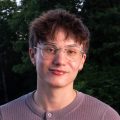
The Overlook is conducting a series of interviews with candidates running in the Nov. 3 election, offering readers an opportunity to hear directly from those seeking to shape their communities. In this installment, reporter Connor Greco interviewed Janet Tweed, Democratic nominee for New York’s 102nd Assembly District. The district includes all of Greene and Schoharie counties as well as parts of Albany, Delaware, and Otsego counties.
In The Overlook’s coverage area, the district includes the towns of Hunter and Windham.
Tweed, 45, lives in Delhi, in Delaware County, and is a full-time physical therapist. She has served on the Delhi Village Board since 2022, following a four-year term on the Delhi Town Board. She ran an unsuccessful campaign for the 102nd Assembly District in 2024, losing to incumbent Republican Assemblymember Christopher Tague, who is leaving his seat to seek election to the 51st Senate District. Tweed is married and has a teenage son.
On the ballot, she will appear on the Democratic and Working Families party lines.
Tweed is running against former U.S. Rep. Marc Molinaro, of Catskill, who also served as Federal Transit Administration administrator under President Donald Trump. Molinaro will appear on the Republican party line. He didn’t respond to multiple requests for an interview.
The following has been lightly edited for clarity and concision.
The 102nd Assembly District includes some of the most rural parts of New York. What do you think Albany policymakers most often misunderstand about rural communities, and what would you do differently?
Tweed: One thing that is overlooked in Albany is communications. There are still pockets where there is no cell service, no cable, no fiber, no way to communicate. That’s why, when Verizon sent the letters out about discontinuing copper landlines, it was such a big deal in this district, because people said fiber stops half a mile away. Cell service is inconsistent in my home depending on the weather. I need that landline, and that might be taken away from me.
I’m a physical therapist. I think about emergencies. What happens if your house is on fire, or you’ve fallen, and you can’t get up? How do you call for help when there is nothing? Because technology has advanced in many of the more urban and suburban areas, it’s easy to forget that’s not the case everywhere.
Distance is another thing. There is little to no public transportation. It is conceivable that someone could drive over an hour to get to their local hospital. Cell-service-wise, we need to continue to seek funding so that we can all actually get rural broadband fiber and have cell service where we are.
What is your position on New York’s current spending and budget priorities? Are there areas where you believe the state should spend more, and areas where you think the state should spend less?
Tweed: I live in rural New York, so I think about rural issues a lot, especially rural healthcare and rural schools. Funding needs to match the needs. For both of those, it is about having providers. Whether it’s a healthcare provider or a teacher, you need to have staff. You need to have transportation so that people can get to and from these essential services, whether it’s education or healthcare, and that does require money. It requires funding, it requires support, and sometimes that is technological support.
Healthcare has come a long way with our telehealth services, but once again, that infrastructure piece of communications is key. For our schools, it is making sure that if students do require additional services, that they can take advantage of them in their home school district and don’t have to be bused to another district.
Changing the funding shifts for both of those would be great foundation aid. That formula needs to be addressed, because it has not kept up with the needs of our communities. Rural schools are amazing, and the chance to teach classes of 15 to 20 students is a very unique situation, as compared to larger schools. But that requires funding so the teachers have the resources that they need.
The harder thing is where do we trim without hurting the good programs that we have? I think one of the places that we should look, which is not very favorable, is how much we are spending on paying government officials. That would include my own position that I’m looking to run for. Yes, it is a full-time job, but is it commensurate with the number of hours worked and what we are doing? That can be a place that we can look to trim.
Housing affordability has become an increasingly important issue in the Catskills and other parts of the district. What role should the state play in making housing more affordable while preserving the character of rural communities?
Tweed: That’s the dream, isn’t it? That is exactly what we want to do. Affordable housing is an issue happening everywhere, but we do see it more in rural districts that have a larger second-home population. That Airbnb style, the short-term rentals, have become a real income boom for some folks, but it has turned into a more corporatized thing rather than someone renting out their second home or their vacation home or something. When that happens, it becomes more and more challenging to find rents that actually match income and salary for everyday folks.
What can Albany do about that? They’ve already started to put some framework in place to allow local municipalities to start to create their own rules about short-term rentals versus long-term rentals, and collecting of a bed tax, so municipalities know what the makeup of their community is, not just what the income is from property tax or from sales tax. That framework is in place.
Actually supporting programs that get it, not just to start the process but to get the study if they need a study, and then working to make sure that the lawyer fees to draft resolutions and laws are actually managed, would be a benefit that the state could provide to municipalities so that they’re not reinventing the wheel each time a community wants to do this.
The state could also help communities to review, revise, and update their zoning and zoning codes so that they make sense with the changing demographics of the area. We need to help municipalities address the needs at their level before we can start throwing money at a problem without knowing what the problem is.
What can the state do if a town has little or no framework in place to regulate short-term rentals?
Tweed: You want to follow the hierarchy that’s in place. First, you have your town-level government. What are they doing and what supports, what help do they need? Can they handle it themselves? And if not, what do they need? They should be able to reach out to the county level, whether it’s a board of supervisors or a county legislature, to help address concerns in that area.
The mountaintop provides a ton of revenue for Greene County, so there should be some offset, and that’s something that can be handled locally. That’s really where I would encourage people to start. I like to say that I support local government, but part of that is making sure that we are enabling them to, ideally, solve their own problems. And if not, how do we minimally help so that they can continue to have a sustainable program rather than becoming dependent on the state or somebody else for their administrative or infrastructure needs?
What is your position on the state’s current approach to renewable energy development, and how would you balance the state’s climate goals with concerns about land use and local control?
Tweed: It’s time for the Office of Renewable Energy Siting and Electric Transmission to be reviewed. A commission to do so would be great. The Office of Renewable Energy has not been as good with communication and as transparent as I would like. People do feel like it’s aggressive, that it’s not a good thing, and that’s hard, because when you’re talking about large infrastructure projects, you are going to have a host community, and the host community should be getting a benefit for being the host to a large project.
A commission to review ORES to allow more transparency and accountability could help people understand the way the rules are written, the topsoil, the prime farmland, is not an option through the ORES program. What somebody does on their private property as a private entity is a different story.
I am disappointed that those climate goals that were set up in 2019 have not been supported to be reached in the timely fashion of 2030, but I appreciate that rather than just throwing them out, now we’re asking how we find ways to reach these standards.
That does require other incentives, so that every flat roof gets solar, not just a field that someone thinks is abandoned. It’s that energy is being created where it’s needed, and that storage of energy is also in safe places. By safe, I also mean supporting local fire and EMS and having enough space so if there is a fire, if there is an emergency, it affects that area and not the entire town or a whole neighborhood.
Tourism is an important part of the economy of the Greene County mountaintop, but some residents argue that the growth of short-term rentals and second homes has driven up costs and made it harder for local workers to afford basic needs and find housing. How should the state balance the economic benefits of tourism with the needs of permanent residents?
Tweed: We’ve already talked about what can be done at the town and the county level, which would be appropriate zoning so that it actually allows people to live full-time as well as to accommodate the influx of visitors as well as workers during peak seasons.
What can the state do? It can be a matter of providing, whether it’s a tax incentive or a tax write-off, so that you can maintain your full-time residence, proving residency full-time. If you are a volunteer fire or volunteer EMS, or even paid, those essential services, there are already some tax write-offs that you can get, but increasing those funds so people can stay and support the local communities is where I think the state can come in.
Being more heavy-handed, I think, would actually result in more problems rather than fewer. It is money and it’s funding, but it is also how the sales tax revenue for the county is redistributed so that it does actually make it to the full-time residences, the small businesses that are on the mountaintop.
Connor Greco is a staff reporter for The Overlook covering Windham, Hunter, and surrounding Greene County communities. Send correspondence to connor@theoverlooknews.com.